If you have been focusing on SEO to grow your business, you already know the value of being visible on Google. However, you could be missing an opportunity to get in front of your ideal customers immediately, while your organic rankings continue to build. This is where Google Advertising comes in.
Whether you want more calls, more enquiries, or more sales, a focused and correctly targeted Google Ads campaign can put your business in front of the right people at the exact moment they’re searching for your services.
This guide will walk you through the essential steps to get started, without wasting your budget.
1. Set clear goals before you spend a penny
Before you start with Google Ads, be clear about what success looks like for you. A campaign without clear objectives is like setting off on a road trip with no destination — you will burn fuel without knowing if you’re getting anywhere.
Ask yourself
- Are you aiming for leads (calls, form fills) or sales (e-commerce purchases)?
- Do you want to increase brand awareness in your local area?
- Are you testing the waters for a new service?
Example: A local accountant might set a goal of “10 new client enquiries per month from local businesses” — specific, measurable, and realistic.
Your goal will influence everything from your campaign type to your budget.
2. Understand how Google Ads works
Google Ads operates like a live auction. You choose keywords your audience might search for, place bids, and compete for the top spots in search results.
However, it’s not just about who bids the most. Google considers:
- Bid amount: How much you are willing to pay for a click.
- Quality Score: Based on your ad’s relevance, click-through rate, and landing page experience.
- Ad Rank: A combination of your bid and Quality Score that decides if and where your ad shows.
This means a smaller business with a highly relevant ad can outshine a bigger competitor with a bigger budget.
3. Know your audience and keywords
The best Google Ads campaigns are built on a deep understanding of who you are trying to reach and what they are searching for.
- Define your audience: age, location, needs, and pain points.
- Keyword research: Use tools like Google Keyword Planner, SEMrush, or Ubersuggest to identify keywords with buying intent.
- Match keyword intent: Choose keywords that match where the searcher is in the buying journey.
- High intent: “emergency plumber Manchester” (ready to hire)
- Low intent: “how to fix a leaking tap” (research stage)
- Negative keywords: Stop wasting clicks on irrelevant searches by excluding terms like “jobs”, “DIY”, or “cheap” if they don’t match your service.
4. Structure your ads the smart way
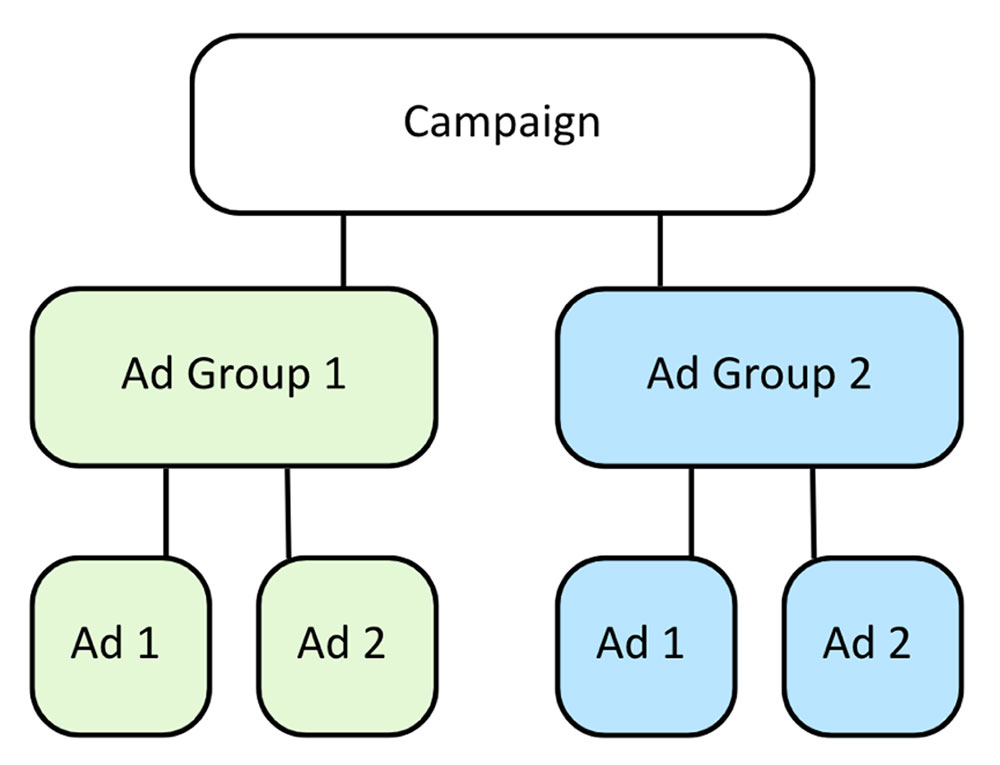
Google Ads has three main levels:
- Campaign: Sets your goal, location targeting, budget, and bidding strategy.
- Ad group: Groups related keywords together.
- Ads: The actual text that searchers see.
A smart structure means:
- Grouping similar keywords into tightly themed ad groups.
- Creating ads that match the exact intent of those keywords.
- Keeping location targeting and budgets separated for different services or areas.
Example: If you’re a digital marketing agency, you might have one campaign for “SEO services” and another for “Google Ads management” — each with its own ad groups for different search intents.
5. Create ads that get clicks (and conversions)
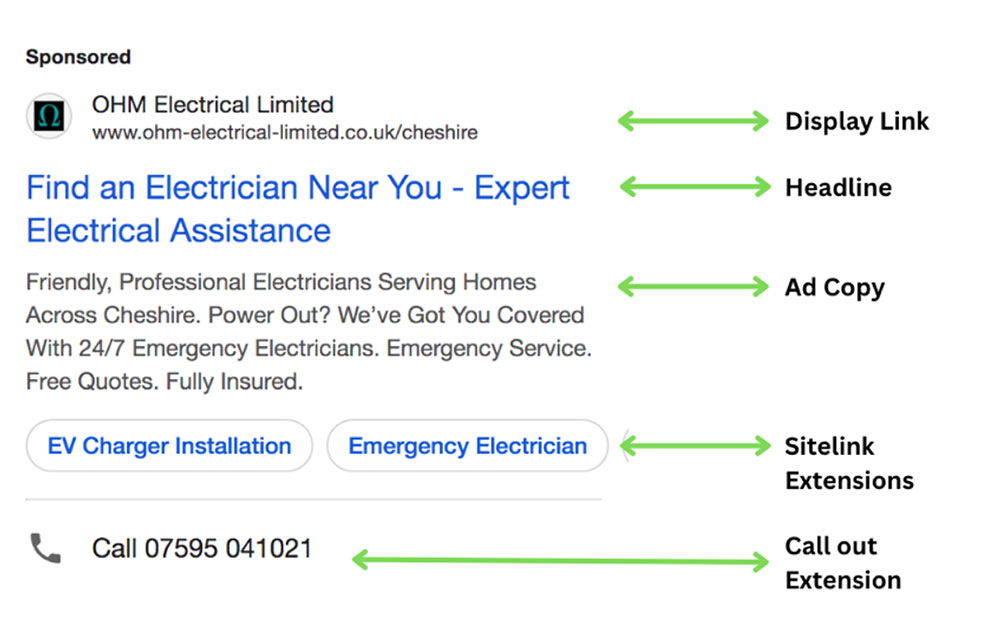
Your ad copy has a split second to grab attention, stand out from competitors, and convince someone to click.
Best practices
- Use the keyword in the headline so the ad feels immediately relevant.
- Highlight your unique selling points: free consultation, fast turnaround, award-winning service.
- Add a clear call-to-action: “Call now”, “Get a quote”, “Book today”.
- Use ad extensions to show extra links, your phone number, or special offers.
6. Build landing pages that convert
Sending ad traffic to your homepage is one of the biggest mistakes beginners make. Your landing page should be a continuation of your ad, delivering exactly what the searcher expected when they clicked.
Must-haves for a high-converting landing page
- A headline that matches your ad copy.
- A short, persuasive intro explaining your offer.
- Bullet-point benefits that make the value clear.
- Trust elements like testimonials, reviews, or guarantees.
- A simple, visible call-to-action (form, phone number, or booking button).
Example: If your ad is for “Free Mortgage Advice in Chester”, your landing page should immediately highlight the free advice offer, not bury it halfway down the page.
7. Set a realistic budget and monitor campaign performance
Start with a budget you can comfortably test with for at least 2–4 weeks. This gives you enough data to make informed decisions.
Key metrics to monitor
- Click-through rate (CTR): Are your ads engaging enough?
- Conversion rate: Are visitors taking the action you want?
- Cost per conversion: Is each lead or sale affordable for your business?
8. Test, refine, and optimise
Google Ads success comes from consistent refinement. Check your search term reports weekly to see what’s triggering your ads and cut out anything irrelevant.
Things to optimise
- Keywords: Remove poor performers; add new high-converting terms.
- Ad copy: Keep testing new headlines and descriptions.
- Bids: Increase bids for top performers; reduce for underperformers.
- Landing pages: Try different layouts, headlines, and CTAs to boost conversions.
Mindset shift: Think of Google Ads as an ongoing experiment, not a one-off campaign.
Bringing it all together
Launching your first Google Ads campaign doesn’t have to be overwhelming. By setting clear goals, targeting the right audience, and keeping a close eye on performance, you can turn clicks into real business results. Remember, the most successful strategies use Google Ads and SEO together: paid advertising can help to bring the quick wins, while SEO builds your long-term growth. It is important to start small with your paid campaigns, learn from the data, and you will soon have a channel that works around the clock to bring in leads.
Written by Kirsty Wright, Co Thought Digital – a digital marketing agency specialising in paid advertising.