What can happen if you save images you found online and show them on your website: My client received a letter from Rights Control requesting over £4,000
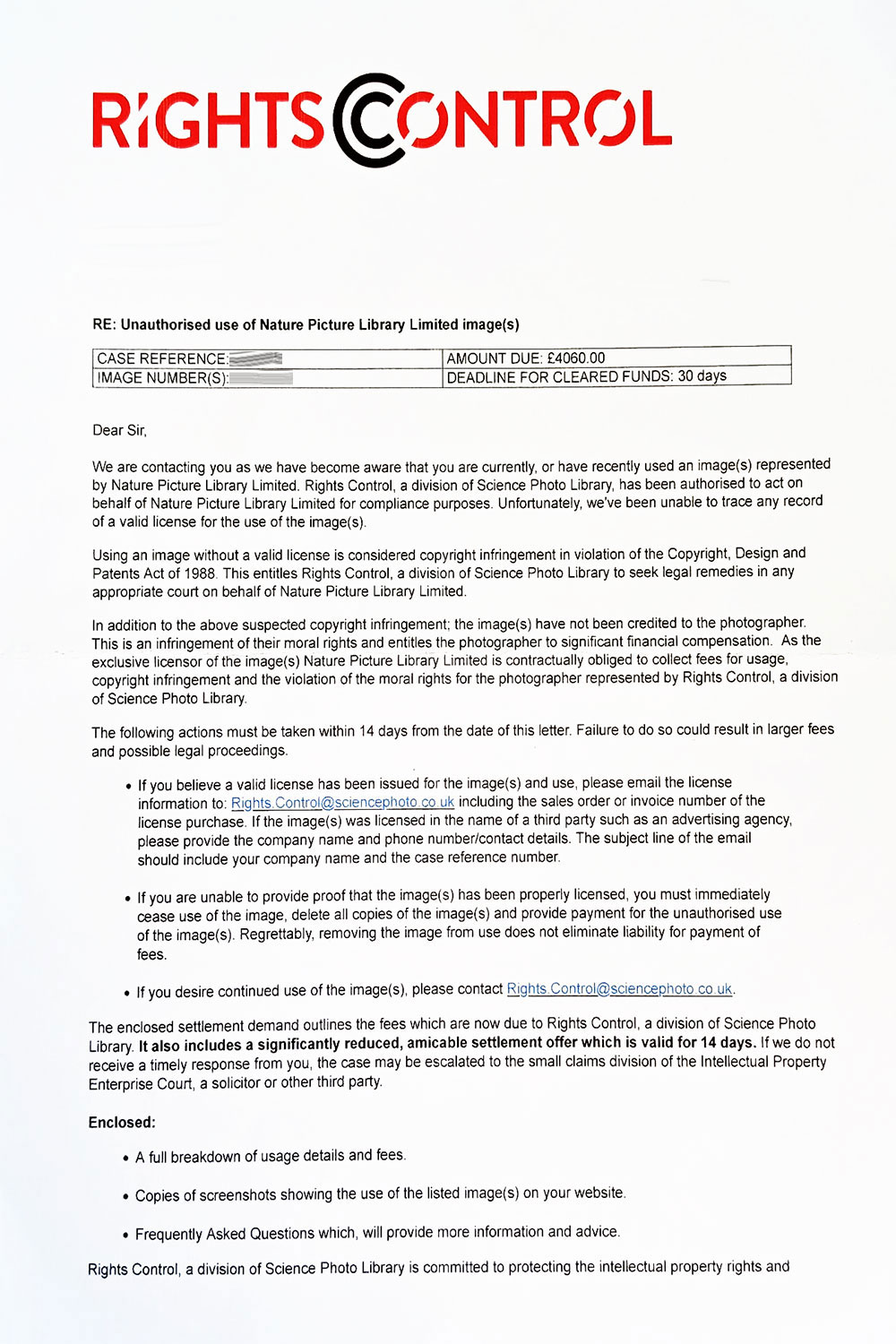
The situation: A couple of weeks ago, one of our lovely website clients called and said they received a letter requesting the payment of £4,000 for using an image illegally on their website.
Due to the lack of knowledge, they did what unfortunately a lot of small business owners do: They find an image in Google, save it to their computer and then upload it to their own website.
This is illegal as most images you find are protected by copyright.
However, receiving a letter like this caused huge amount of stress to my client and a week of sleepless nights, I could detect their stress and anxiety in their voice and it clearly got to them.
The letter requests over £4,000 and if they pay within 14 days, it’s “only” £1,500.
If you do a quick search online, you find other people who had the same issue, even asking for more money (here’s an example from Reddit).
This is what the letter looked like.
⬇️⬇️⬇️
Never ever ever save images you find online and upload them to your website!
Use reputable stock libraries instead! Images in Canva are free and legal to use. Some stock libraries charge a fee.
I’ve been working as a website designer for over 2 decades, and I have seen this situation before.
Here’s how we dealt with it in this case.
- Remain calm and ask someone who can help (an experienced web designer for example).
- Research the company online who sent you the letter to check they are legitimate.
- Find out how other people dealt with this – search in Google. If you’re too distressed to do this, ask someone to do this for you.
- Find a similar image in a reputable image library (for example Alamy or Getty Images).
- Find the standard fee for an image like the one you used. The fee usually depends on the size of image and where you want to use (i.e. in print, online etc.). In our case (Feb 2024), the fee for a small image that is similar to the one that was used was approximately £150, for a larger image £250.
- Send an email to the company, say you have received the letter, and you’re willing to pay the standard fee for the image (i.e. not £4,000!).
Here’s what happened in our case:
- I helped my client do the research.
- I suggested a fee amount to “offer”.
- They sent an email with a counter offer (in our case it they offered £250 plus £50 administration fee).
- This offer was instantly accepted.
- They sent an invoice. My client paid.
- We then went through their website and exchanged every image to prevent this from happening again.
The matter was resolved with a week, but caused a significant amount of stress to my client.
What if you’re wrongly accused of using images illegally?
For example. if you use Canva, you can use any image you’ve found for personal and commercial material.
However, Canva has it’s own copyright information (available here and here). Check out the following screenshot (taken on 16 May 24) to let you see where you can use Canva content:
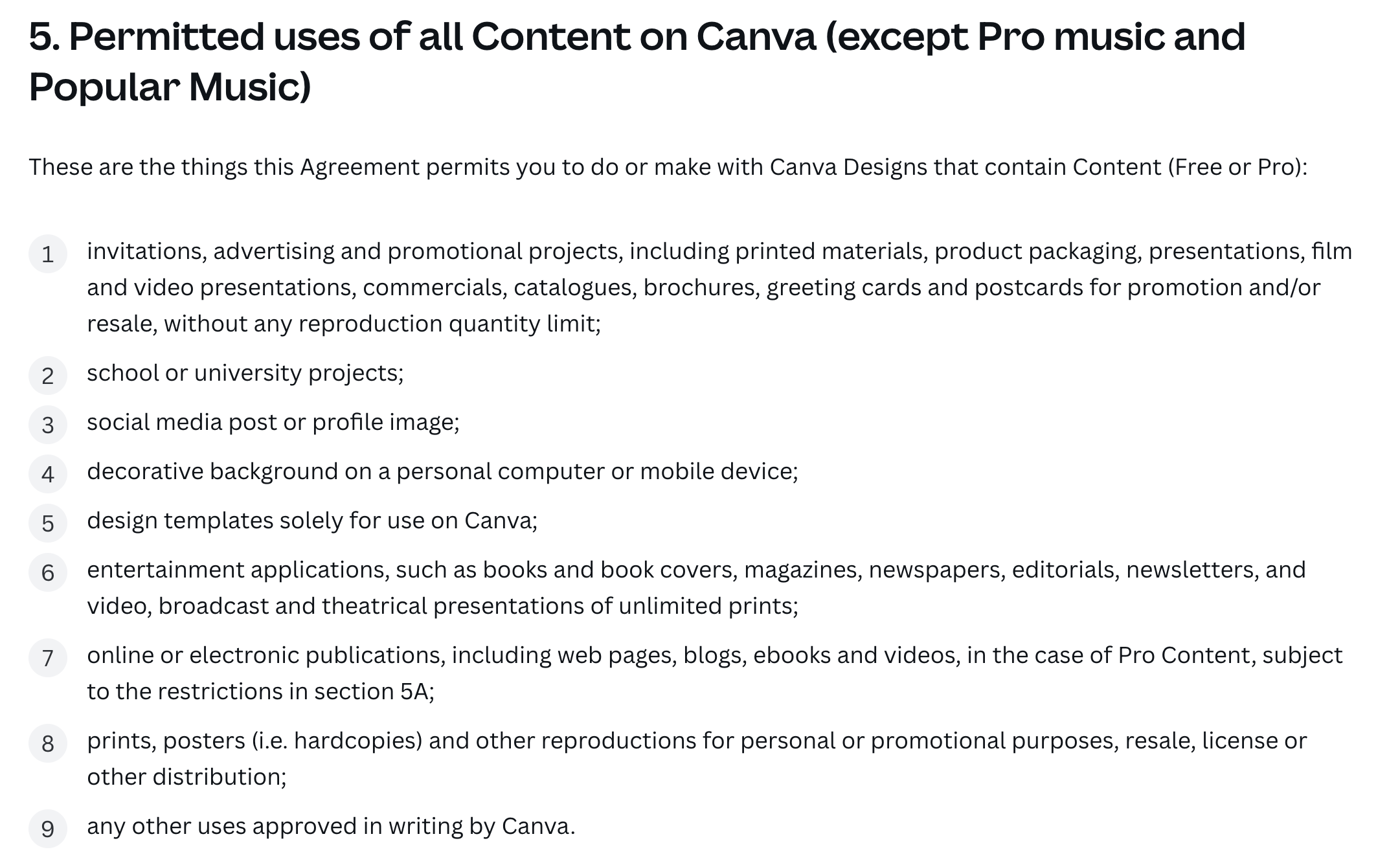
Proof that you have a Pro licence with Canva or other stock image website
There are many stock image websites out there and they all have their own terms and conditions. Some require you to credit the photographer or designer, others don’t. Send a screenshot of your licence and also of your image in Canva in your design as a starting point if you’re wrongly accused.
Do not save images from Google and upload them to your website!
Respect photographers’ work and use the correct way to display images on your website.
Read similar examples online: